Table of Contents
ToggleChicago’s real estate market is shifting, and tiny houses are no longer a fringe movement, they’re a practical solution for budget-conscious homebuyers and those seeking a simpler lifestyle. With soaring property taxes and limited affordable housing, many Chicagoans are turning to tiny houses as a way to own property without the financial burden of a traditional home. Tiny houses offer flexibility, lower maintenance costs, and a chance to live sustainably in one of America’s most vibrant cities. Whether you’re a first-time homebuyer, downsizer, or someone looking to escape the rental market, understanding Chicago’s tiny home landscape is your first step toward finding the right property.
Key Takeaways
- Tiny houses for sale in Chicago range from $120,000 to $300,000, offering a practical alternative to traditional homes with lower purchase prices and dramatically reduced property taxes.
- Popular neighborhoods for tiny homes include Pilsen, Logan Square, Bridgeport, Bronzeville, Bucktown, and Rogers Park, each offering different price points and neighborhood development potential.
- Zoning compliance is critical—Chicago has no unified tiny home designation, so verify that your target property meets local residential zoning rules, lot-coverage requirements, and minimum square-footage standards before making an offer.
- Tiny homes benefit from lower utility bills, minimal maintenance costs, and a smaller carbon footprint, making them attractive to first-time homebuyers, downsizers, and environmentally conscious buyers.
- Inspect tiny houses thoroughly for structural integrity, confirm lender financing availability early (some require 20% down), and honestly evaluate whether small-space living fits your lifestyle before purchasing.
Why Tiny Homes Are Gaining Traction in Chicago
Chicago’s housing affordability crisis is real. The median home price in the city hovers around the mid-$300,000s, and property taxes rank among the highest in the nation. For many people, a traditional single-family home simply isn’t an option, not financially, anyway.
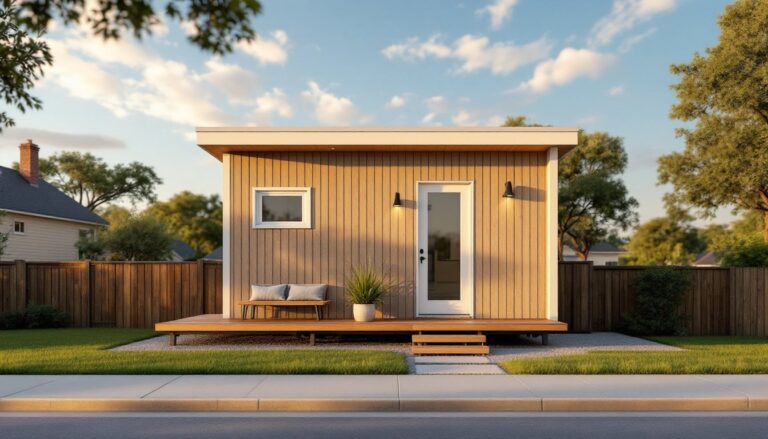
Tiny houses change the equation. A compact, efficiently designed home on a Chicago lot can sell for $150,000 to $250,000, depending on neighborhood and condition. That’s a down payment for a conventional home, but a full purchase price for a tiny house. Beyond the sticker price, tiny home owners benefit from dramatically reduced property taxes, lower utility bills (less square footage to heat and cool matters in a Midwest winter), and minimal maintenance headaches.
The lifestyle appeal shouldn’t be overlooked either. Urban professionals and retirees alike are recognizing that a 600–800 square-foot home forces intentional living. You buy less stuff. You spend more time outside or in your community. And in a dense city like Chicago, that’s increasingly attractive.
Also, tiny houses align with growing sustainability concerns. Smaller carbon footprint, less energy consumption, and simplified living resonate with environmentally conscious buyers. Chicago’s push toward green building and climate goals makes tiny homes a logical fit for the city’s future.
Where To Find Tiny Houses For Sale in Chicago
Finding a tiny house for sale in Chicago requires patience and the right search strategy. Unlike suburban subdivisions, tiny homes don’t cluster in dedicated developments, at least not yet. You’ll find them scattered across neighborhoods as renovated vintage cottages, newly constructed infill units, or converted commercial spaces.
Start with broad real estate platforms like Zillow, Redfin, and Realtor.com, filtering for homes under 1,000 square feet. Many tiny houses are listed as “cottages” or “bungalows” rather than “tiny homes,” so adjust your search terms. Work with a real estate agent familiar with Chicago’s neighborhoods: they’ll have insider knowledge about off-market listings and coming-soon properties.
Specialized tiny home networks and forums can be goldmines too. Facebook groups dedicated to Chicago tiny living, along with sites focused on micro-housing, often feature sellers and investors active in the space. Don’t sleep on local real estate investment companies, many renovate and flip compact properties specifically targeting the growing tiny home market.
Network with local builders and architects who specialize in small-space design. Chicago has a growing community of professionals focused on tiny house architecture and adaptive reuse, and they often have pipeline projects or referrals.
Popular Neighborhoods For Tiny Home Buyers
Certain Chicago neighborhoods have become hotspots for tiny home seekers. Pilsen, known for its artist community and industrial-to-residential conversion, offers converted loft spaces and new infill construction in the 600–900 square-foot range. Logan Square has seen an influx of compact new construction, though prices reflect the neighborhood’s trendiness.
Bridgeport and Bronzeville are emerging affordable alternatives with developing tiny home inventories. These South Side neighborhoods offer lower entry prices (often $120,000–$180,000) and community investment initiatives that support small-footprint development.
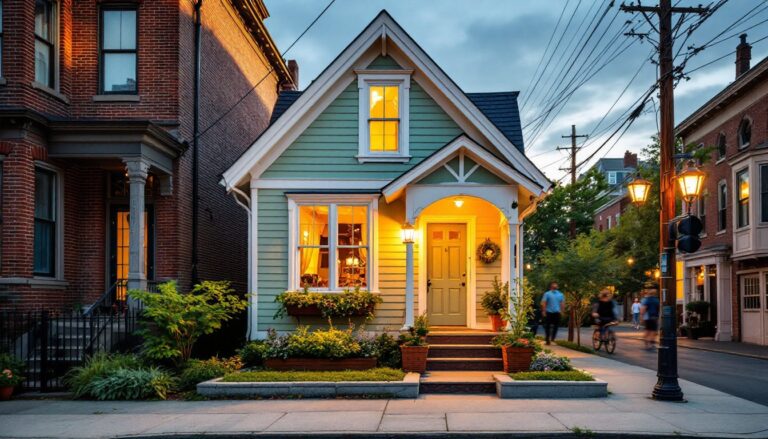
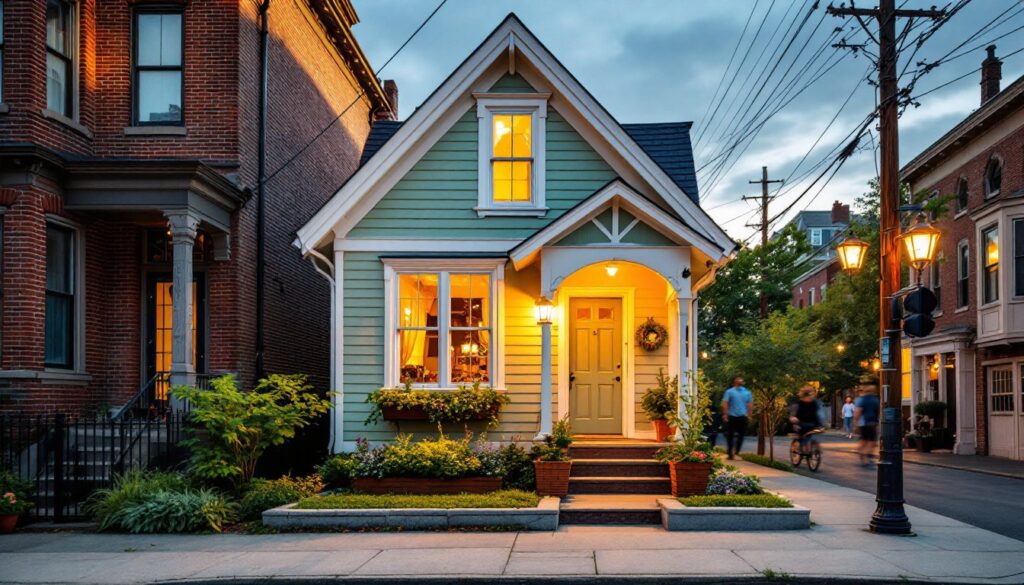
Bucktown and Wicker Park have scattered tiny homes among their Victorian stock, often Victorian cottages built in the early 1900s and now meticulously renovated. North Chicago neighborhoods like Rogers Park and Uptown also feature compact units suitable for downsizers and young professionals.
Price, commute, and neighborhood development potential should all factor into your decision. A $180,000 tiny home in an up-and-coming neighborhood might appreciate faster than a $220,000 unit in a fully gentrified area, but stability and community vibe matter too.
What To Expect: Pricing and Market Trends
Chicago’s tiny home market is still maturing, which creates both opportunity and uncertainty. As of early 2026, tiny houses in Chicago, defined here as homes under 1,000 square feet, typically range from $120,000 to $300,000, with price heavily dependent on location, condition, and recent renovations.
In prime neighborhoods like Wicker Park or Logan Square, expect $200,000–$300,000 for a fully updated 750–900 square-foot home. In emerging or transitional neighborhoods, you might find comparable or even better-condition tiny homes for $150,000–$200,000. The trade-off is gentrification risk, the neighborhood might boom, or it might stay stable.
Market trends favor buyers right now. Interest rates have stabilized, and lenders are increasingly comfortable financing smaller mortgages, making tiny homes more accessible to first-time buyers. Many Chicago investors are quietly acquiring and renovating tiny homes, expecting them to appreciate as land values rise and housing scarcity worsens.
One emerging trend: budget tiny houses designed for faster construction and lower initial cost are attracting developers. Prefab and modular builders are eyeing Chicago as a major market. Publications like Curbed regularly cover Chicago’s micro-housing developments, signaling mainstream attention.
Property tax implications deserve mention. While tiny homes have lower assessed values, Chicago’s property taxes are a fact of life. Expect to pay roughly 1.5–2% of the home’s assessed value annually, though exemptions for owner-occupied primary residences can reduce this. Budget $2,000–$4,000 per year in property taxes on a $200,000 tiny home, depending on the specific neighborhood and exemptions you qualify for.
Essential Considerations Before Buying
Buying a tiny house isn’t just about price, several practical and legal factors will make or break your purchase.
Inspection and structural integrity matter more in a compact space. A single structural issue (foundation cracks, roof leaks, plumbing problems) becomes more costly per square foot than in a larger home. Hire a thorough inspector experienced with small homes and older construction. Vintage cottages are charming, but electrical systems, plumbing, and HVAC might not meet modern standards.
Financing challenges can arise. Not all lenders readily finance homes under $100,000 or in certain neighborhoods. Some require 20% down instead of the standard 15%. Start conversations with your lender early to confirm they’ll approve your loan.
Resale potential is a legitimate concern. While tiny homes are trendy, not every buyer will want one. Ensure the neighborhood has broader appeal and development momentum. A tiny home in an area experiencing disinvestment could be harder to sell.
Storage and lifestyle fit matter more than marketing suggests. Visit comps (comparable tiny homes) and live in a similar-sized space for a weekend if possible. Many buyers underestimate how much they actually need or want to keep. Downsizing isn’t just about square footage: it’s a mindset shift.
Zoning Laws and Regulatory Requirements
This is non-negotiable: Chicago’s zoning codes determine whether a tiny house can legally exist on your lot. You can’t ignore this.
Chicago does not currently have a unified “tiny home” zoning designation. Instead, tiny houses must comply with standard residential zoning (R zones) and lot-coverage, setback, and minimum-square-footage rules that vary by neighborhood and ward. Some areas allow structures as small as 400 square feet: others have minimums around 600–800 square feet. This is a deal-breaker if your target lot or home violates these rules, you can’t just “grandfather in” non-compliant properties in most cases.
Before making an offer, contact Chicago’s Department of Housing and Economic Development or hire a lawyer familiar with local zoning. Some neighborhoods are more permissive about tiny homes and adaptive reuse: others are restrictive. A tiny house community zoning approach might be needed if you’re part of a coordinated development.
Also verify utility access and lot configuration. A tiny home needs connections to sewer, water, and electric. Some older Chicago lots were subdivided in ways that create odd shapes or utility complications. A home inspector and surveyor can clarify these issues.
Finally, understand whether the property is in a flood zone, historic district, or environmentally sensitive area. These overlays add complexity and potential costs. Historic district designations, for instance, can restrict exterior modifications, relevant if you plan renovations.
Permits and variances are sometimes necessary for new construction or significant renovation. Budget time and money ($1,000–$5,000) for permit applications if you’re building or substantially altering a property. Skipping permits is tempting but a mistake that causes headaches at sale time.
Conclusion
Tiny houses in Chicago represent a practical pathway to homeownership in an expensive market. With prices lower than traditional homes, reduced operating costs, and growing availability across diverse neighborhoods, they’re worth serious consideration if your lifestyle and space needs align. Success depends on thorough due diligence: understand zoning, inspect carefully, confirm financing, and honestly assess whether small-space living suits you. Chicago’s tiny home market is poised to grow as more buyers discover the financial and lifestyle benefits.