Table of Contents
ToggleMaine’s rugged coastlines, dense forests, and tight-knit communities are drawing a new wave of homeowners seeking a simpler, more affordable lifestyle. Tiny homes, typically defined as 400 square feet or less, are gaining serious traction in the Pine Tree State, offering both financial freedom and environmental benefits. Unlike their sunbelt cousins, Maine tiny homes must contend with harsh winters, high humidity swings, and strict building codes. But that same climate has sparked innovation in insulation, drainage, and year-round durability. Whether you’re considering a Maine tiny home as a primary residence, a seasonal retreat, or an investment, understanding the local landscape, legal hurdles, and climate-specific design strategies is essential before breaking ground.
Key Takeaways
- Maine tiny homes, defined as 400 square feet or less, offer affordability ranging from $60,000 to $150,000 compared to the state’s median home price of $320,000.
- Site-built Maine tiny homes on permanent foundations qualify for mortgages and appreciate like traditional real estate, while mobile units lack financing options and long-term resale value.
- Maine’s zoning laws vary by municipality with no statewide tiny home definition, making a zoning verification letter and local attorney review essential before purchasing land.
- Maine’s harsh winters and high humidity require R-40 to R-50 wall insulation, R-60+ roof insulation, metal roofs, and whole-house ventilation systems to prevent moisture damage.
- Annual property taxes on a Maine tiny home are approximately $1,040 (versus $3,000+ for conventional homes), and heating costs run $60–$100 monthly in winter versus $150–$250 for larger houses.
- Tiny home communities in progressive Maine towns like Orland and Rockport provide deed protections and shared amenities, though resale demand remains strongest in coastal areas with tourism and remote-worker appeal.
What Defines a Tiny Home in Maine
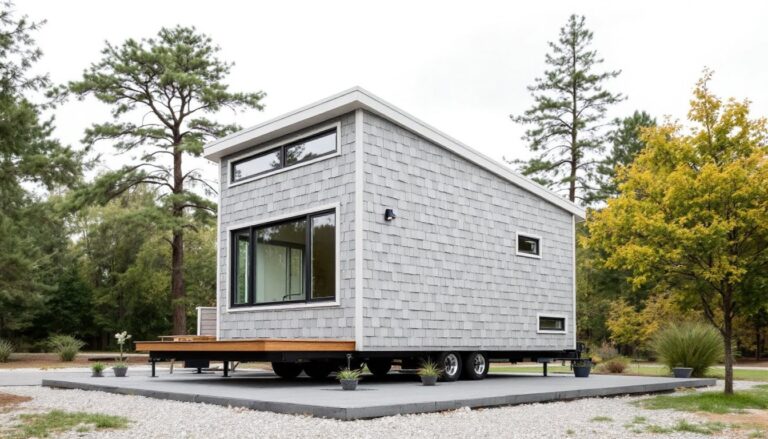
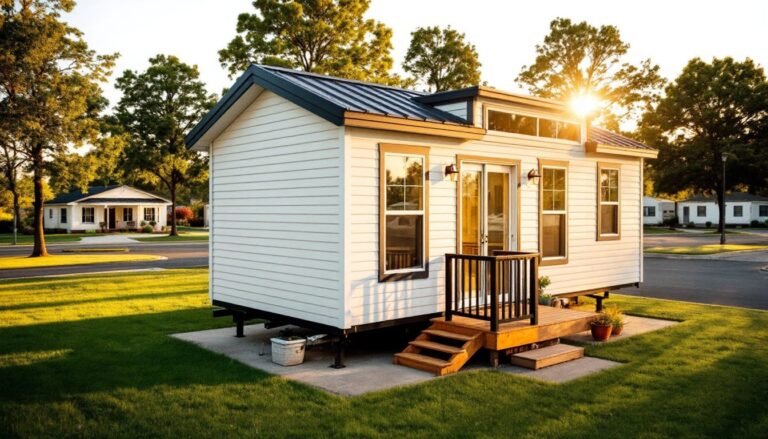
A tiny home is generally defined as a residential dwelling of 400 square feet or less, though some definitions extend to 500 square feet. In Maine, the term applies to both mobile and stationary units. Fixed tiny homes are built on permanent foundations or treated posts and sitework, while mobile units sit on trailers or adjustable skids.
Maine’s building code adopts the International Residential Code (IRC), which means tiny homes must meet the same structural, electrical, and plumbing standards as conventional houses, no shortcuts. A single-story 320-square-foot home with a sleeping loft, compact kitchen, and full bathroom is typical. Living rooms and kitchens are often combined to maximize flow, and every fixture must serve double duty. Appliances are compact: 24-inch refrigerators, 1,000-watt range tops, and stackable washer-dryer units are standard.
The distinction between movable (RV-style) and site-built tiny homes matters legally and financially in Maine. Site-built homes appreciate like traditional real estate and qualify for mortgages: mobile units don’t. Most serious Maine tiny home buyers opt for site-built structures on owned land.
Why Maine Is Becoming a Tiny Home Hotspot
Maine’s affordability crisis and limited housing stock have made tiny homes a pragmatic solution. The state’s median home price hovers around $320,000, but a well-built tiny home, foundation included, runs $60,000 to $150,000 depending on finishes and labor. That gap is drawing first-time buyers, retirees, and remote workers who want to own outright without 30-year mortgages.
Beyond economics, Maine’s natural appeal fuels the movement. Coastal towns like Bar Harbor and Belfast have embraced tiny home communities: inland areas from Bangor to the Moosehead Lake region offer affordable land with stunning views. The slower pace of life, strong community ethos, and access to outdoor recreation, hiking, kayaking, skiing, align perfectly with the minimalist values tiny home dwellers often espouse.
Climate resilience is also driving adoption. With sea-level rise and extreme weather events becoming real threats, many Mainers are repositioning themselves in elevated rural or semi-rural areas where tiny homes can be sited more flexibly than sprawling conventional development. Essentially, Maine tiny homes tick boxes for affordability, lifestyle, and long-term viability that larger developments can’t match.
Legal Requirements and Zoning Considerations
Maine Zoning Laws and Regulations
Maine’s zoning framework is more permissive than many states, but it varies dramatically by municipality. The state has no statewide tiny home definition in statute, so each town writes its own rules. Some embrace them: others restrict lot sizes, setbacks, or foundation types that de facto ban tiny homes.
Key regulations to investigate before buying land:
- Minimum lot size: Rural towns often require 1–3 acres: suburban areas may demand 5+ acres. A few progressive towns (Orland, Hope) have reduced minimums to 0.5 acres for tiny homes.
- Foundation requirements: Most codes require permanent foundations (concrete piers or full basement). Trailers and RV-style units are generally prohibited outside designated RV parks.
- Height restrictions: Standard residential zones allow 35–50 feet: loft ceilings must meet IRC egress requirements (windows, headroom clearances).
- Setbacks and buffers: Typical front/side/rear setbacks are 20–50 feet, depending on the district.
- Wastewater: Septic systems must pass percolation tests and meet Maine Department of Environmental Protection (DEP) standards. In some coastal zones, stricter nitrogen-loading rules apply.
Before purchasing land, order a zoning verification letter from the town planning office ($50–150). Hire a local real estate attorney familiar with tiny home projects, they’ll flag hidden deed restrictions or homeowner association rules that could derail your build. Permits are non-negotiable in Maine: building permits, electrical permits, plumbing permits, and septic approvals are mandatory. Budget 8–12 weeks for the permitting process and $2,000–$5,000 in fees.
Finding and Purchasing a Tiny Home in Maine
Finding a move-in-ready tiny home in Maine is tougher than in warm-climate states like Colorado or Texas, where the market is saturated. But, options exist.
New builds from local builders: Search for Maine tiny home builders through the Tiny House Community Zoning resource, or contact local chapters of the National Association of Home Builders (NAHB). Expect to pay $80,000–$180,000 for a site-built home. Lead times are 6–12 months.
Mobile tiny homes on private land: Some Mainers buy a used mobile tiny home and negotiate land rental or purchase in a private setting. This works if the town allows it (again, zoning check is critical). Financing is trickier, many lenders won’t touch mobile tiny homes.
Land + build-it-yourself: Buy raw land (often $20,000–$50,000 for a 1–2 acre parcel in rural Maine) and hire a builder or oversee the project yourself. DIY builds cost 30–40% less but demand time, knowledge, and sweat equity.
Tiny home communities: Developers are launching planned communities in towns like Orland and Rockport, offering deed restrictions and shared amenities. These are pricier ($100,000+) but offer security and resale clarity. Research the developer’s track record and community governance structure carefully.
Design and Customization Tips for Maine’s Climate
Maine’s climate, winters dipping to –20°F, spring thaws, coastal salt spray, and high humidity, demands design choices that differ markedly from mild-weather tiny homes.
Insulation and air sealing: Maine tiny homes need R-40 to R-50 wall insulation and R-60+ roof insulation. Spray foam (closed-cell, 2–3 inches) is expensive but excellent for air-sealing ducts and penetrations. Fiberglass batts are cheaper but require meticulous vapor barriers. Use exterior rigid foam sheating under cladding to prevent thermal bridging at studs.
Moisture and mold control: High humidity and condensation are enemies. Install a whole-house ventilation system (HRV or ERV) to exhaust moist air while recovering heat. Avoid standard drywall in bathrooms and kitchens: use cement board or mold-resistant drywall. Flash all windows and door frames generously: leaks hide fast in small spaces.
Roofing and drainage: Metal roofs with standing seams shed snow and ice better than asphalt. Pitch roofs at least 5:12 slope to promote runoff. Gutters and downspouts must direct water at least 4 feet from the foundation.
Exposed studs and joists: Frame 2×6 walls instead of 2×4 to gain cavity depth and structural robustness against wind and snow load. Use structural lumber graded for Maine, which accounts for moisture cycling. Lofts must have robust joists (2×10 minimum) and diagonal bracing.
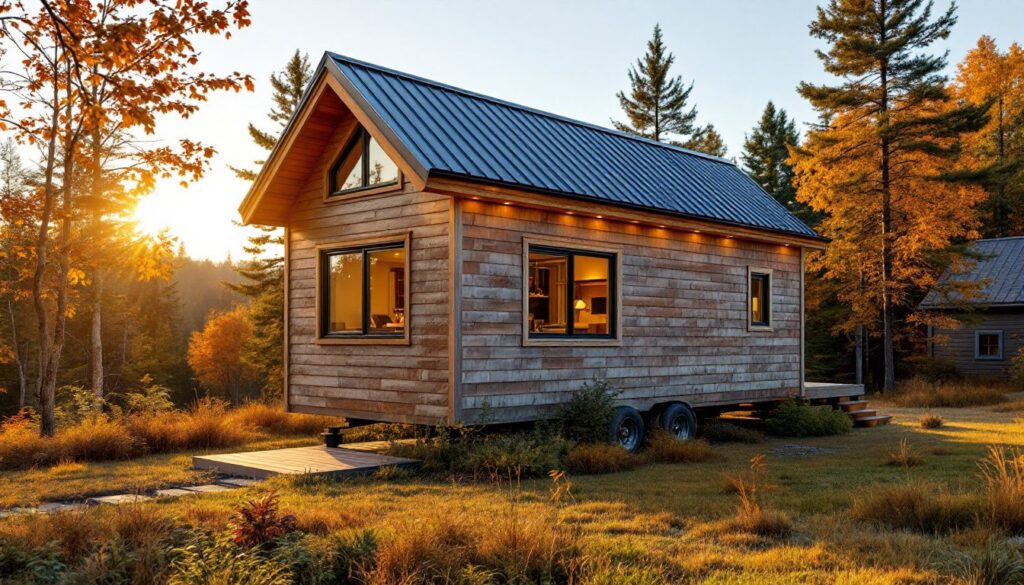
Finishes and aesthetics: Materials like cedar siding, metal accents, and reclaimed wood age beautifully in Maine’s salt and sun. Interior finishes should be durable: polished concrete or resilient composite flooring outperform hardwood in tight, humid spaces. Using Tiny Home Design Software can help visualize layouts and material palettes before committing to construction.
The Financial Benefits of Maine Tiny Homes
The economics of Maine tiny homes are compelling. A 350-square-foot tiny home costs roughly $60–$120 per square foot to build (total $21,000–$42,000 in materials and labor), whereas a conventional 2,000-square-foot home runs $100–$200+ per square foot. Even with site prep, permits, and utilities, you’re looking at a total project cost of $60,000–$150,000.
Property taxes are drastically lower. A tiny home assessed at $80,000 in a town with a $13 per $1,000 assessed value rate costs about $1,040 annually, a quarter of a typical $300,000 home’s tax bill. Over 10 years, that’s $9,000 saved.
Utilities are minimal: Heating a 320-square-foot insulated tiny home in Maine costs $60–$100 monthly in winter, versus $150–$250 for a 1,500-square-foot house. Water and electric are similarly compressed. Tiny Home Living philosophy emphasizes owning less, consuming less, and avoiding the hidden costs of a larger footprint.
Maintenance costs shrink: Smaller roofs, fewer walls to paint, smaller HVAC systems. A $3,000 roof replacement on a full house becomes $800 on a tiny home. These savings compound over decades of ownership.
Resale potential in Maine is mixed. In desirable towns with strong tourism and remote-worker migration (Camden, Acadia region), tiny homes sell steadily. In rural inland areas, demand is softer. Work with a local realtor to gauge market appetite before building.