Table of Contents
ToggleWhen kitchen square footage is at a premium, a full-size dishwasher can eat up precious counter and cabinet space, or worse, force you to do dishes by hand every single night. A tiny dishwasher offers a practical middle ground for renters, homeowners with galley kitchens, and anyone living in a compact space who refuses to sacrifice convenience. These compact models have evolved significantly, delivering legitimate cleaning performance without the bulk of traditional dishwashers. Whether you’re working with a studio apartment, a remodeled cottage, or simply optimizing an already tight layout, understanding what tiny dishwashers can and can’t do will help you make a smart choice. Let’s walk through the options, installation basics, and real-world performance so you can figure out if a compact dishwasher is right for your home.
Key Takeaways
- A tiny dishwasher measures about 17–18 inches wide with a capacity of 4–6 place settings, making it ideal for renters, small apartments, and galley kitchens without sacrificing cleaning performance.
- Portable countertop models require no permanent plumbing and connect directly to your faucet in minutes, while built-in compact dishwashers offer a finished look but demand professional installation and dedicated water lines.
- Tiny dishwashers use just 3–5 gallons per cycle compared to 25+ gallons for hand-washing, saving both water and energy while costing only $0.10–$0.20 per run to operate.
- Proper loading and maintenance—including flat placement of plates, correct use of detergent, and monthly spray-arm cleaning—ensure your compact dishwasher delivers consistent, genuine cleaning results.
- A tiny dishwasher pays for itself in 3–5 years through reduced water consumption and labor, making it a practical investment for small households and a space-saving solution that reclaims both time and counter real estate.
What Is a Tiny Dishwasher and Why It Matters
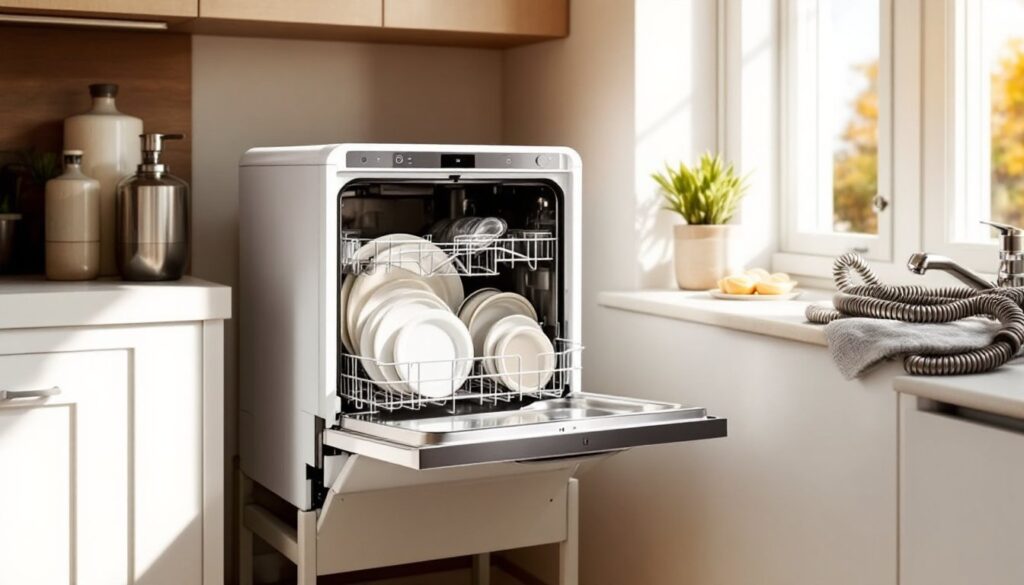
A tiny dishwasher, sometimes called a compact, portable, or mini dishwasher, is a standalone appliance that occupies roughly 17–18 inches of width, compared to the standard 24-inch full-size model. Capacity typically ranges from 4 to 6 place settings, versus 12–14 in conventional models. They’re not toys: they’re legitimate appliances with spray arms, wash cycles, and heated drying that actually work.
Why does this matter for your space? If you’re renting and can’t modify plumbing, a portable unit that connects to your faucet gives you automatic dishwashing without landlord friction. If you’re living in a tiny home, an older house with minimal under-counter room, or an apartment where every inch counts, these machines reclaim time and reduce the mental load of hand-washing. They also use less water and energy per cycle than hand-washing multiple loads, so they’re not just convenient, they’re genuinely efficient for smaller households.
Space-Saving Models and Top Styles to Consider
Compact dishwashers come in three main flavors, each with tradeoffs.
Portable (or countertop) models are free-standing units that live on your counter or inside a cabinet. They hook up temporarily to your kitchen faucet, no permanent plumbing required, and roll away when not in use. Brands like Danby, EdgeStar, and others dominate this category. Installation takes minutes: cleanup involves one hose connection.
Built-in compact dishwashers (about 18 inches wide) fit into a cabinet opening, similar to a full-size model. They need dedicated plumbing, water supply lines, and electrical hookup, so installation is more involved, hire a plumber if you’re not experienced. The payoff is a finished look and no counter footprint. These are genuinely integrated into your kitchen layout.
Drawer-style compacts are the premium option, sleek, quiet, and modular. They’re pricier and still require professional install, but they stack and feel premium in modern minimal spaces.
Portable and Countertop Options
Portable units are the easiest entry point for most DIYers. The standard connection is a universal adapter that screws onto your faucet aerator (the screen at the faucet tip). You run the intake hose to the faucet, place the drain hose into your sink, and you’re ready. No tools required. One practical note: make sure your faucet can accommodate the adapter. Older, oddly shaped aerators sometimes don’t play nicely. Check the specs before buying.
Capacity is real but honest, a portable unit won’t handle a full dinner party’s worth of dishes. It excels at the daily load: breakfast plates, pans from meal prep, drinking glasses. If you’re cooking elaborate dinners for a family of six, you’ll still hand-wash some items or run two cycles. That’s not a failure of the design: it’s a realistic limitation of the format. Experts at Good Housekeeping have tested countertop mini dishwashers and regularly report on models that balance performance and footprint.
Installation and Setup for Small Kitchens
For portable models: Setup is straightforward enough for anyone comfortable turning a wrench. Screw the faucet adapter onto your aerator (most are standard M24 thread, but check). Attach the intake hose and run the drain hose into the sink or a nearby drain. Fill the rinse-aid dispenser (this improves drying and spot prevention, don’t skip it). Run an empty hot-water cycle to flush the lines before your first load.
The real trick is placement. You need accessible water and a spot where the hoses don’t kink. Countertop real estate is probably already contested, so consider a mobile cart or a dedicated corner. Make sure the hoses don’t impede cabinet doors or drawer pulls.
For built-in compacts: You’ll want a professional plumber or experienced DIYer for this. The cabinet opening needs to be sized correctly, supply lines need to be run (hot water, cold water, drain), and electrical hookup must be code-compliant. In most jurisdictions, appliance installation doesn’t require a permit, but plumbing changes do. Check with your local building department first. The actual install, measuring, securing the unit, connecting lines, takes 2–4 hours if everything aligns. Budget for potential complications: existing cabinetry might need minor modifications, or your drain line might require a P-trap adjustment.
One often-overlooked detail: airflow and ventilation. Built-in units need a few inches of clearance on sides and back for water circulation and drying. Don’t wedge it flush into a cabinet alcove and wonder why dishes come out damp.
Cost, Efficiency, and Budget Planning
Portable dishwashers run roughly $300–$600 for a solid mid-range model: budget units sit around $200, and premium brands push toward $1,000. Built-in compacts are $400–$1,200+ depending on features and brand. Installation labor for a built-in typically adds $200–$500 if you hire a plumber.
Operating costs are minimal. A compact dishwasher uses about 3–5 gallons per cycle (versus 25+ gallons hand-washing the same load), and electric consumption is around 0.8–1.5 kWh per cycle, roughly $0.10–$0.20 per run at average US electricity rates. Over a year of daily use, you’re looking at $36–$73 in electricity and water combined.
The efficiency math works especially well for renters and small households. If you’re doing dishes twice a day by hand (or skipping them because you’re tired), a $400 portable unit pays for itself in reduced water and sanity over 3–5 years. For homeowners planning to stay put, a built-in compact adds modest resale appeal and justifies the plumbing investment more easily.
Resources like The Kitchn frequently discuss small kitchen solutions and appliance ROI, which can help frame purchasing decisions in context.
Making the Most of Your Compact Dishwasher
Smart loading is everything with a tiny dishwasher. Plates go on the bottom rack flat, bowls nestled upside-down or at an angle for water spray. Glasses and mugs on the top, angled downward, this isn’t just tidier: it’s how water actually reaches and rinses them. Don’t overcrowd. Pots and pans should have space between them, and don’t wedge utensils too tightly in the basket or they won’t clean properly.
Pre-rinse only what matters. Dried-on food deserves a quick rinse or scrape, but modern detergents and spray patterns handle regular soil without a full pre-wash. Over-rinsing wastes water and defeats the efficiency advantage.
Choose detergent carefully. Powders, tabs, and gels all work, but check the manual, some compacts have small detergent dispensers that don’t fit larger pods. Rinse aid (a liquid that reduces spotting and helps drying) is often overlooked but genuinely improves results in hard-water areas.
Maintenance keeps things running. Clean the spray arms monthly, they get grimy and spots can clog the nozzles. Wipe gaskets if you notice odor. Run a cleaning cycle with a commercial dishwasher cleaner twice a year. These small routines prevent the slow decline in performance that leads to disappointment.
For ideas on optimizing compact spaces generally, Apartment Therapy covers small-space living and budget-friendly makeovers that include kitchen strategies.
Conclusion
A tiny dishwasher isn’t a compromise: it’s a practical solution for kitchens where space and convenience collide. Whether you go portable for flexibility or built-in for integration, understanding capacity, installation reality, and daily operation sets you up for genuine satisfaction rather than regret. Measure your space honestly, choose the right style for your situation, and you’ll reclaim both time and counter space. That’s worth the investment.